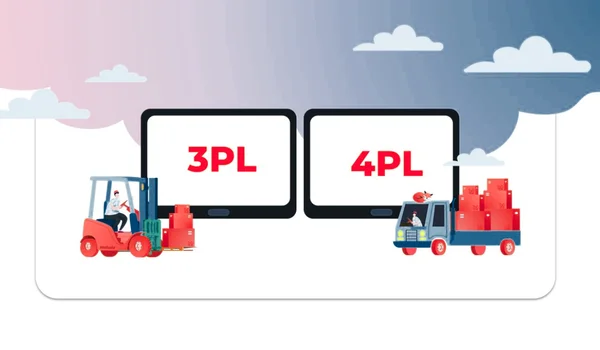
3PL vs 4PL is an important comparison for businesses that want to outsource their logistics and supply-chain operations.
Both Third-Party Logistics (3PL) and Fourth-Party Logistics (4PL) providers help businesses manage logistics, but they work at different levels.
A 3PL company typically performs logistics activities, such as transportation, warehousing and order fulfilment. A 4PL provider generally takes a broader role by coordinating and managing the overall supply chain, which may include multiple 3PL providers, technology systems and other logistics partners.
In simple terms:
3PL = Executes logistics
4PL = Manages and coordinates the wider logistics ecosystem
What Is 3PL?
3PL stands for Third-Party Logistics.
A 3PL company provides logistics services to another business. Instead of investing in its own transportation network, warehouses or fulfilment infrastructure, a company can outsource some or all of these activities to a 3PL provider.
Common 3PL services include:
- Transportation
- Warehousing
- Inventory management
- Order fulfilment
- Packaging
- Distribution
- Last-mile delivery
- Reverse logistics
For example:
Manufacturer → 3PL Warehouse → Distributor/Retailer
The 3PL provider handles the agreed logistics operations.
What Is 4PL?
4PL stands for Fourth-Party Logistics.
A 4PL provider takes a more strategic and coordinating role in the supply chain.
Instead of only performing logistics activities, a 4PL may manage and coordinate multiple logistics service providers.
A simplified structure could be:
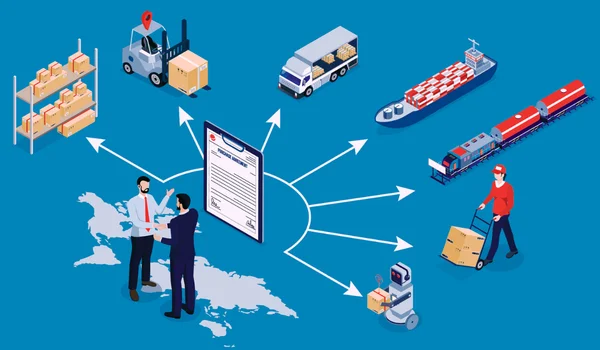
Business → 4PL → 3PLs / Transporters / Warehouses / Technology Providers
The 4PL provider may coordinate transportation, warehousing, technology, inventory and other supply-chain functions.
The focus is generally on end-to-end supply-chain management and optimisation.
3PL vs 4PL: Key Differences
| Factor | 3PL | 4PL |
| Full form | Third-Party Logistics | Fourth-Party Logistics |
| Main role | Executes logistics | Coordinates the wider supply chain |
| Focus | Operational | Strategic and managerial |
| Transportation | May provide directly | May coordinate providers |
| Warehousing | Often provides directly | May manage through partners |
| Fleet | May own or operate vehicles | Usually coordinates transportation resources |
| Technology | Supports operations | Can integrate multiple systems |
| Multiple logistics providers | Usually not the main focus | Often coordinates several providers |
| Supply-chain visibility | Operational visibility | End-to-end visibility |
| Complexity | Lower | Higher |
| Suitable for | Specific logistics outsourcing | Complex supply-chain management |
3PL vs 4PL: How They Work
3PL Model
Suppose an e-commerce company needs warehousing and delivery.
The company hires a 3PL provider.
The 3PL may:
- Receive inventory
- Store products
- Process orders
- Pack products
- Arrange transportation
- Deliver orders
- Process returns
The 3PL is directly involved in the logistics operation.
4PL Model
Now consider a large company operating across multiple states.
It may have:
- Several warehouses
- Multiple transport companies
- Different courier providers
- Various technology systems
- International freight partners
Instead of managing all these providers internally, the company can appoint a 4PL provider.
The 4PL can coordinate the network and help manage the overall supply chain.
Operational vs Strategic Role
This is one of the biggest differences between 3PL and 4PL.
3PL: Operational
A 3PL focuses on getting logistics work done.
For example:
- Moving goods
- Storing inventory
- Picking orders
- Packing shipments
- Delivering products
4PL: Strategic
A 4PL focuses more on how the entire supply chain should operate.
It may analyse:
- Transportation networks
- Warehouse locations
- Logistics providers
- Inventory flows
- Technology
- Delivery performance
- Supply-chain costs
The goal is to improve the overall logistics system rather than simply perform individual activities.
Difference in Asset Ownership
A 3PL provider may own or directly operate logistics assets.
These can include:
- Trucks
- Warehouses
- Delivery vehicles
- Material-handling equipment
However, not every 3PL owns all its assets. Some use leased or partner infrastructure.
A 4PL provider generally focuses more on management and coordination and may use multiple external logistics providers rather than operating a large physical asset network itself.
3PL vs 4PL: Cost Difference
The pricing structure can also differ.
3PL
A 3PL may charge for individual services such as:
- Storage
- Transportation
- Per-order fulfilment
- Picking and packing
- Delivery
- Handling
4PL
A 4PL may charge management or coordination fees based on the scope and complexity of the supply-chain programme.
The actual commercial structure varies from contract to contract.
Businesses should therefore compare the total supply-chain cost and value, rather than assuming that 4PL is always more expensive than 3PL.
Advantages of 3PL
Businesses can benefit from 3PL outsourcing in several ways.
Lower Infrastructure Requirements
The company may not need to build its own warehouses or delivery network.
Logistics Expertise
The 3PL provider already has operational experience.
Scalability
Businesses can increase logistics capacity as shipment volumes grow.
Faster Implementation
A company can use an existing logistics network instead of building one from scratch.
Operational Efficiency
Experienced logistics providers may have established systems, staff and processes.
Advantages of 4PL
4PL can be useful when the supply chain becomes more complex.
End-to-End Coordination
A 4PL can coordinate multiple logistics functions.
Single Management Layer
Instead of managing numerous logistics providers independently, the business can have a central coordinating partner.
Better Visibility
A 4PL may integrate data from different providers to provide a broader view of the supply chain.
Strategic Optimisation
The provider can analyse the complete logistics network rather than focusing on one warehouse or transportation service.
Reduced Management Complexity
The business can outsource a significant portion of supply-chain coordination.
Disadvantages of 3PL
3PL may not solve every supply-chain problem.
Potential limitations include:
- Less control over outsourced operations
- Dependence on the logistics provider
- Multiple providers may still need to be managed
- Service quality can vary
- Integration between different systems may be difficult
For a simple logistics requirement, however, these limitations may not be significant.
Disadvantages of 4PL
4PL involves a higher level of outsourcing and coordination.
Potential challenges include:
- Greater dependence on the 4PL provider
- Complex implementation
- Data integration requirements
- Greater need for performance monitoring
- More complex contracts
- Transition challenges
A 4PL model may therefore be unnecessary for a company with a relatively simple supply chain.
Which Is Better: 3PL or 4PL?
Neither model is automatically better.
The right choice depends on the company’s requirements.
Choose 3PL When:
- You need transportation or warehousing
- Your logistics network is relatively simple
- You want to outsource specific operations
- You need fulfilment services
- You want access to logistics infrastructure
Consider 4PL When:
- You operate across multiple locations
- You use several logistics providers
- Your supply chain is complex
- You need end-to-end coordination
- You want strategic supply-chain management
- You need consolidated logistics data and visibility
3PL vs 4PL Example
Imagine a company selling consumer products across India.
Using 3PL
The company may hire:
- 3PL A for warehousing
- Transporter B for interstate transportation
- Courier C for last-mile delivery
The company still manages the relationships between these providers.
Using 4PL
The company appoints a 4PL provider to coordinate the network.
The 4PL may manage:
Warehouse + Transport + Courier + Technology + Supply-Chain Reporting
The company therefore has a central logistics management layer.
3PL vs 4PL in E-Commerce
E-commerce companies can use both models.
A 3PL can provide:
- Fulfilment
- Warehousing
- Packing
- Shipping
- Returns
A 4PL can coordinate multiple fulfilment centres, transportation providers, courier companies and technology platforms.
For a small online seller, 3PL may be sufficient.
For a large e-commerce business with a complex national network, a 4PL approach may provide greater coordination.
3PL vs 4PL in India
Both models have opportunities in India’s growing logistics sector.
Indian businesses increasingly operate across multiple states and distribution channels. Manufacturers, retailers, e-commerce businesses and other companies may therefore need external logistics expertise.
3PL providers can support day-to-day logistics execution, while 4PL providers can help businesses manage increasingly complex supply-chain networks.
The growth of:
- E-commerce
- Manufacturing
- Organised retail
- Warehousing
- Multimodal logistics
- Digital supply-chain systems
can create opportunities for both models.
3PL vs 4PL: Simple Explanation
The easiest way to remember the difference is:
3PL: “We will handle your logistics operations.”
4PL: “We will manage and coordinate your entire logistics network.”
A 3PL is closer to execution, while a 4PL is closer to orchestration and strategic management.
FAQs
What is the main difference between 3PL and 4PL?
3PL providers generally execute logistics activities such as transportation, warehousing and fulfilment. 4PL providers generally coordinate multiple logistics functions and providers at a broader supply-chain level.
Is 4PL better than 3PL?
Not necessarily. 3PL is often suitable for businesses that need specific logistics services, while 4PL can be more suitable for complex supply chains requiring broader coordination.
Does a 3PL own trucks and warehouses?
A 3PL may own or operate trucks, warehouses and other assets, but it does not have to own all of them. Some providers use leased or partner assets.
Does a 4PL own logistics assets?
A 4PL generally focuses on managing and coordinating logistics resources and providers rather than relying primarily on its own physical assets.
Which is suitable for a small business?
A small business with straightforward transportation, warehousing or fulfilment requirements will often find a 3PL model more practical than a full 4PL arrangement.
Can a company use both 3PL and 4PL?
Yes. A 4PL provider can coordinate multiple 3PL providers as part of an integrated supply-chain management model.
Final Thoughts
The 3PL vs 4PL difference mainly comes down to the level of responsibility.
A 3PL provider performs logistics operations, such as transportation, warehousing and fulfilment. A 4PL provider takes a broader management role, coordinating multiple logistics providers, systems and supply-chain activities.
For businesses with straightforward logistics requirements, 3PL can be a practical outsourcing solution. For companies managing large, multi-location and multi-provider supply chains, 4PL can provide a higher level of coordination and strategic oversight.
The best choice ultimately depends on the size, complexity, technology requirements and supply-chain goals of the business.