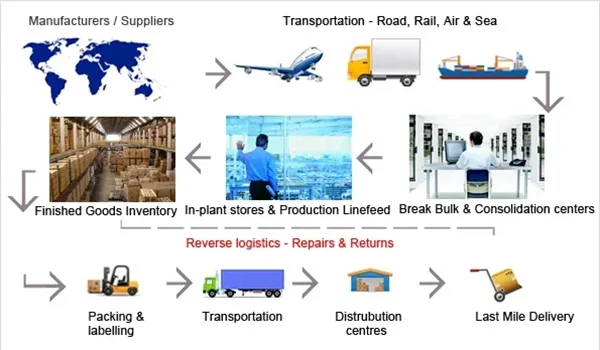
Logistics companies make money by helping businesses and individuals move, store, manage and deliver goods. While transportation is the most visible part of logistics, companies can generate revenue from several other services, including warehousing, order fulfilment, packaging, freight management and last-mile delivery.
In India, logistics businesses range from small transport operators and courier agencies to large 3PL companies managing complete supply chains for manufacturers, retailers and e-commerce businesses.
The basic business formula is simple:
Logistics Revenue − Operating Costs = Profit
However, the actual revenue model can be quite different depending on the type of logistics company.
How Do Logistics Companies Make Money?
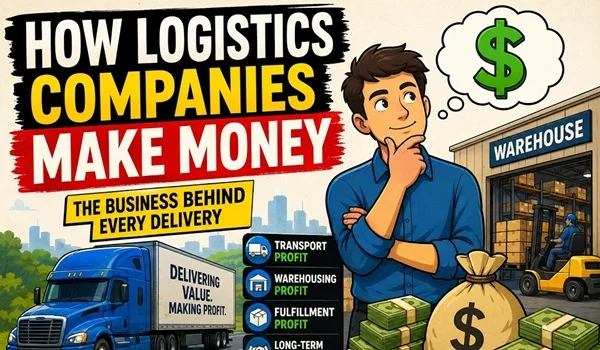
Logistics companies generally make money by charging customers for one or more services.
The major revenue sources include:
- Transportation charges
- Freight charges
- Delivery fees
- Warehousing charges
- Fulfilment fees
- Packaging and handling charges
- Freight brokerage commissions
- Contract logistics fees
- Reverse logistics charges
- Value-added services
A company may use only one model or combine several of them.
- Transportation Charges
Transportation is one of the oldest and most common logistics revenue models.
A logistics company moves goods from one location to another and charges the customer for the service.
For example:
Manufacturer → Logistics Company → Distributor
The company may calculate its price based on:
- Distance
- Weight
- Volume
- Vehicle type
- Type of goods
- Route
- Delivery urgency
- Shipment size
A truck operator, for example, may charge on a per-trip basis, while other businesses may use per-kilometre or per-tonne pricing.
How Profit Is Generated
Suppose a company charges ₹35,000 for a shipment.
Its costs could include:
- Fuel
- Driver expenses
- Toll charges
- Maintenance
- Vehicle financing
- Insurance
- Administrative expenses
The amount left after these expenses contributes to the company’s operating profit.
- Freight Charges
Freight companies make money by charging customers to transport cargo.
This can involve:
- Full truckload
- Part-load
- Rail freight
- Air freight
- Sea freight
- Multimodal transportation
In larger logistics operations, the company may combine different transportation modes to move goods efficiently.
The company earns a margin between what the customer pays and what it costs to arrange the transportation.
- Last-Mile Delivery Fees
Last-mile delivery is the final stage of getting a product to the customer.
For example:
Warehouse → Local Delivery Hub → Customer
E-commerce companies may pay logistics providers for delivering individual orders.
The logistics company can charge:
- Per delivery
- Per parcel
- Per kilometre
- Monthly contract fees
- Volume-based rates
High delivery volumes can make this model attractive, but route efficiency and delivery density are important for profitability.
- Warehousing Charges
Logistics companies can generate revenue by storing products for other businesses.
Customers may pay for:
- Storage space
- Pallet storage
- Inventory handling
- Loading and unloading
- Stock management
- Order processing
For example, an e-commerce seller may use a third-party warehouse instead of maintaining its own facility.
The logistics provider earns storage and handling fees while providing the required infrastructure.
- Fulfilment Fees
Fulfilment goes beyond simply storing products.
A fulfilment company may manage the complete process:
Receive Inventory → Store → Pick → Pack → Ship → Track → Handle Returns
The customer may be charged a combination of:
- Storage fee
- Picking fee
- Packing fee
- Shipping fee
- Handling fee
- Return-processing fee
This model can create several revenue streams from the same customer.
- Third-Party Logistics (3PL) Contracts
A 3PL company manages logistics activities for another business.
Instead of charging only for individual shipments, the logistics provider may enter into a longer-term contract.
For example, a manufacturer may outsource:
- Warehousing
- Transportation
- Distribution
- Inventory handling
- Order fulfilment
The logistics company then receives contractual payments based on agreed services and volumes.
Why 3PL Can Be Attractive
Long-term contracts can provide:
- Recurring revenue
- Predictable shipment volumes
- Better asset utilisation
- Stronger customer relationships
- Freight Brokerage Commission
A freight broker connects customers who need transportation with available transporters.
The broker may not own trucks.
The business works approximately like this:
Customer → Broker → Transporter
Suppose a customer agrees to pay ₹50,000 for transportation.
The broker finds a transporter willing to perform the job for ₹45,000.
The difference of ₹5,000, after applicable expenses, represents the broker’s gross margin.
This is an asset-light logistics model because the business does not necessarily need to purchase a large fleet.
- Packaging and Handling Charges
Some logistics companies provide additional services such as:
- Packing
- Labelling
- Sorting
- Loading
- Unloading
- Palletisation
- Product handling
These services can generate additional revenue beyond the basic transportation charge.
For businesses shipping large volumes, these small charges can become a significant revenue stream.
- Reverse Logistics
When customers return products, logistics companies may charge businesses for managing the reverse movement.
The process can be:
Customer → Pickup → Sorting Centre → Warehouse/Seller
Reverse logistics may include:
- Return pickup
- Transportation
- Inspection
- Sorting
- Restocking
- Replacement delivery
E-commerce and D2C businesses can create substantial demand for return-management services.
- Value-Added Services
Modern logistics companies increasingly provide services beyond transportation.
Examples include:
- Inventory management
- Order management
- Shipment tracking
- Customs support
- Supply-chain consulting
- Technology platforms
- Temperature monitoring
- Specialised handling
These services allow logistics companies to generate additional revenue from existing customers.
Logistics Company Revenue Model Example
Consider a hypothetical logistics company serving e-commerce businesses.
Suppose the company handles 10,000 deliveries per month.
If its average logistics charge is ₹80 per delivery:
10,000 × ₹80 = ₹8,00,000 monthly revenue
But ₹8 lakh is not profit.
The company still has to pay for:
- Delivery personnel
- Fuel
- Vehicles
- Warehouse
- Technology
- Management
- Customer support
- Maintenance
- Insurance
- Other operating expenses
Therefore:
Revenue ≠ Profit
This distinction is extremely important when evaluating a logistics business.
Major Costs of Logistics Companies
The profitability of a logistics company depends heavily on cost management.
Fuel
Fuel can be a major expense for transportation and delivery companies.
Employee Costs
Companies may need:
- Drivers
- Delivery executives
- Warehouse workers
- Supervisors
- Operations managers
- Customer support staff
Vehicle Costs
Fleet-based companies have expenses related to:
- Vehicle purchase
- Financing
- Maintenance
- Repairs
- Tyres
- Insurance
Warehouse Costs
Warehouse operators need to manage:
- Rent
- Electricity
- Security
- Labour
- Equipment
- Maintenance
Technology
Technology expenses can include:
- GPS tracking
- Fleet-management software
- Warehouse-management systems
- Order-management software
- Customer portals
Toll and Route Expenses
Long-distance transportation can involve substantial toll and route-related expenses.
Why Logistics Companies Don’t Always Have High Profit Margins
A logistics company may handle a large amount of business but still have relatively modest margins.
This happens because logistics is often a high-volume, cost-sensitive business.
For example, a company may generate ₹10 crore in revenue but spend most of that amount on transportation, labour, fuel, warehouses and other operating expenses.
Therefore, logistics companies generally focus heavily on:
- Increasing shipment volume
- Reducing empty trips
- Improving vehicle utilisation
- Optimising routes
- Controlling fuel consumption
- Automating operations
- Retaining large customers
The Importance of Vehicle Utilisation
For fleet-based logistics companies, an empty vehicle can represent lost earning potential.
Consider:
Delhi → Mumbai: Loaded
but
Mumbai → Delhi: Empty
The company earns revenue on one direction but still incurs costs associated with the return journey.
Finding return loads, where practical, can improve vehicle utilisation and overall economics.
How Logistics Companies Increase Profit
Successful logistics companies don’t only try to increase revenue. They also try to reduce the cost of serving each shipment.
Some common strategies include:
Route Optimisation
Better route planning can reduce unnecessary kilometres and fuel consumption.
Higher Delivery Density
Delivering multiple shipments in the same area can make each delivery more economical.
Technology
Tracking and automation can reduce manual work and improve visibility.
Long-Term Contracts
B2B contracts can provide predictable volumes and recurring revenue.
Asset-Light Operations
Using partner fleets can reduce the capital required to own vehicles.
Multiple Services
A company can increase customer value by providing transportation, warehousing, fulfilment and reverse logistics together.
B2B vs B2C Revenue
Logistics companies can serve both business customers and individual consumers.
| Model | Typical Customer | Revenue Method |
| B2B | Manufacturer | Contract/freight charges |
| B2B | Distributor | Transportation charges |
| B2C | E-commerce customer/order | Per-delivery charges |
| 3PL | Large business | Contract fees |
| Warehousing | Seller/manufacturer | Storage & handling fees |
| Freight brokerage | Shipper | Commission/margin |
B2B logistics can provide larger and more predictable contracts, while B2C logistics can provide high shipment volumes.
Can Logistics Companies Make Good Profits?
Yes, but profitability depends on the specific business model.
A logistics company can improve its profitability when it has:
- Strong customer contracts
- High shipment volumes
- Good fleet utilisation
- Efficient routes
- Controlled fuel costs
- Reliable employees
- Low vehicle downtime
- Efficient warehouses
- Strong technology
- Good working-capital management
A company with poor cost control can struggle even when its revenue is growing.
Final Thoughts
Logistics companies make money through much more than simply transporting goods. Transportation, freight, last-mile delivery, warehousing, fulfilment, 3PL contracts, brokerage, packaging and reverse logistics can all contribute to revenue.
The most successful logistics businesses generally focus on two things at the same time: increasing the amount of business they handle and reducing the cost of handling each shipment.
For entrepreneurs entering India’s logistics sector, understanding the difference between revenue, gross margin, operating costs and actual profit is essential before investing in vehicles, warehouses or technology.