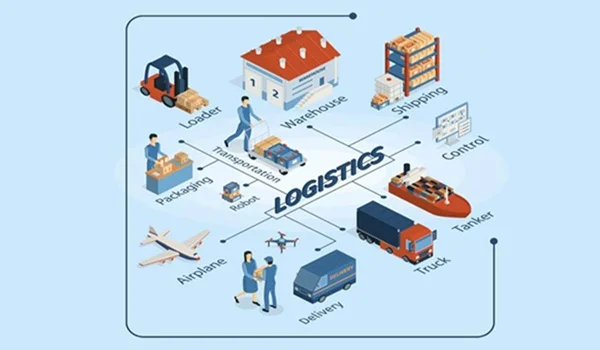
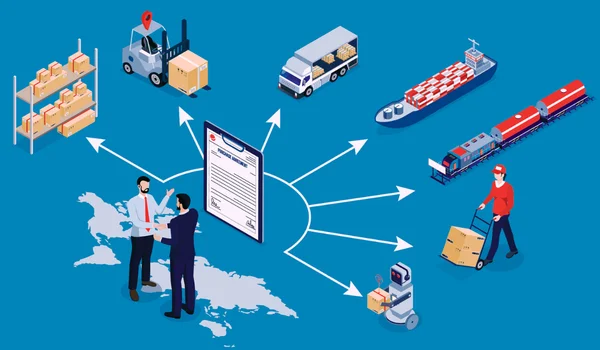
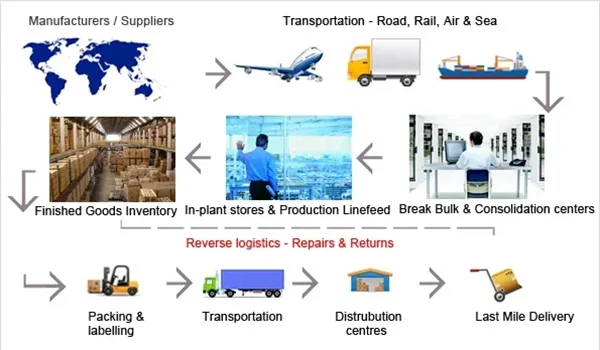
The logistics industry in India is an important part of the country’s economy. It connects manufacturers, suppliers, warehouses, distributors, retailers and consumers by moving goods from one place to another.
India’s large geographical area, growing manufacturing activity, expanding e-commerce market and increasing interstate trade have created strong demand for logistics services. The industry includes transportation, warehousing, freight forwarding, courier services, last-mile delivery, supply-chain management and specialised logistics.
The sector is also changing rapidly as companies adopt technology, organised warehousing, multimodal transportation and data-based supply-chain management.
What Is the Logistics Industry?
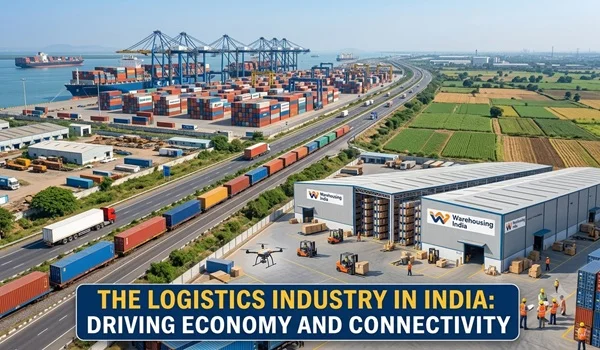
The logistics industry manages the movement, storage and distribution of goods from their point of origin to their final destination.
A simple supply chain can look like this:
Manufacturer → Warehouse → Distributor → Retailer → Customer
A logistics company may manage one part of this chain or several stages together.
Major activities include:
- Road transportation
- Rail freight
- Air cargo
- Shipping and coastal transportation
- Warehousing
- Courier and parcel delivery
- Last-mile delivery
- Freight forwarding
- Inventory management
- Order fulfilment
- Reverse logistics
- Cold-chain logistics
Importance of the Logistics Industry in India
Logistics is essential because almost every major economic activity depends on the movement of goods.
Manufacturers need raw materials delivered to factories. Finished products must then reach distributors, retailers and customers.
The sector supports:
- Manufacturing
- Agriculture
- Retail
- E-commerce
- Pharmaceuticals
- Automotive
- Food processing
- Construction
- Imports and exports
- Wholesale distribution
An efficient logistics network can help businesses reduce delivery times, manage inventory and control supply-chain costs.
Major Segments of the Indian Logistics Industry
The Indian logistics sector is made up of several interconnected segments.
- Road Transportation
Road transport is a major part of domestic goods movement in India.
It provides flexibility because trucks can directly connect factories, warehouses, markets and customers.
Common road-logistics services include:
- Full truckload
- Part-load
- Local transportation
- Interstate transportation
- Dedicated fleet services
- Last-mile delivery
Small transport operators and large organised logistics companies both operate in this segment.
- Rail Logistics
Rail is particularly useful for moving large quantities of goods over longer distances.
It can be used for commodities, containers and industrial cargo.
Rail-based logistics can help businesses move high-volume cargo while reducing dependence on road transportation for certain routes.
- Warehousing
Warehousing has become increasingly important as businesses require organised storage and distribution facilities.
Modern warehouses may provide:
- Inventory storage
- Sorting
- Packaging
- Order processing
- Loading and unloading
- Inventory tracking
- Distribution
The growth of e-commerce, organised retail and manufacturing has increased demand for strategically located warehouses.
- E-Commerce Logistics
E-commerce has created a major requirement for parcel movement and last-mile delivery.
The typical process is:
Seller → Fulfilment Centre → Delivery Hub → Customer
Logistics providers may handle:
- Order pickup
- Sorting
- Transportation
- Last-mile delivery
- Cash collection where applicable
- Returns
- Courier and Express Delivery
Courier companies handle documents, parcels and time-sensitive shipments.
Customers can include:
- Individuals
- Businesses
- E-commerce sellers
- Banks
- Educational institutions
- Government organisations
Express delivery is particularly important for businesses that need faster shipment movement.
- Third-Party Logistics
Third-party logistics, or 3PL, involves outsourcing logistics activities to a specialised service provider.
A 3PL company may manage:
Transportation + Warehousing + Inventory + Fulfilment + Distribution
This allows businesses to focus on their core operations while an external company manages logistics.
- Cold Chain Logistics
Cold-chain logistics is used for products requiring controlled temperatures.
Important applications include:
- Pharmaceuticals
- Vaccines
- Dairy
- Frozen food
- Meat
- Seafood
- Certain agricultural products
Cold-chain operations require specialised storage facilities, vehicles and monitoring systems.
Growth of the Logistics Industry in India
India’s logistics sector is benefiting from several structural changes.
Growth of E-Commerce
Online shopping has increased the number of shipments moving across the country.
Customers increasingly expect:
- Faster delivery
- Shipment tracking
- Easy returns
- Reliable delivery windows
This creates opportunities for courier, fulfilment and last-mile logistics companies.
Expansion of Manufacturing
The growth of domestic manufacturing increases the movement of raw materials, components and finished products.
Industrial clusters also create demand for transportation and warehousing services.
Infrastructure Development
Improved highways, freight corridors, ports, airports and logistics infrastructure can make the movement of goods more efficient.
Organised Warehousing
Businesses are increasingly looking for professional warehouses with better inventory management, security and technology.
Digitalisation
Technology is changing how logistics companies plan and monitor operations.
Role of Technology in Indian Logistics
Technology has become an important part of modern logistics operations.
Companies can use technology for:
- GPS vehicle tracking
- Route optimisation
- Digital proof of delivery
- Fleet management
- Warehouse management
- Inventory tracking
- Shipment tracking
- Automated billing
- Data analysis
For example, GPS tracking allows a company to monitor a vehicle’s location while it is transporting goods.
Warehouse-management software can also help businesses understand how much inventory is stored, where it is located and when it needs to be moved.
National Logistics Policy and Logistics Infrastructure
The Indian government has taken steps to improve logistics efficiency and promote better coordination between different modes of transportation.
The National Logistics Policy focuses on improving logistics efficiency, reducing costs and creating a more integrated logistics ecosystem.
The broader development of multimodal logistics is also important.
Instead of depending entirely on one transportation method, cargo can move through a combination of:
Road + Rail + Port + Air
This can be useful for long-distance and international supply chains.
Logistics Hubs in India
Several Indian cities and regions have developed strong logistics activity because of their industrial base, consumer markets, ports, airports and transport connections.
Important logistics centres include:
- Delhi-NCR
- Mumbai
- Pune
- Bengaluru
- Chennai
- Hyderabad
- Ahmedabad
- Kolkata
- Hyderabad
- Jaipur
- Nagpur
- Gurugram
- Noida
The best location depends on the type of logistics operation.
For example, a company involved in port-related cargo may prefer a coastal logistics hub, while an e-commerce fulfilment operation may prioritise proximity to large consumer markets.
Major Customers of Logistics Companies
Logistics companies serve businesses across many industries.
Manufacturing
Factories require transportation for raw materials, components and finished goods.
E-Commerce
Online sellers need warehousing, fulfilment and last-mile delivery.
Retail
Retail chains require regular movement of products between warehouses and stores.
Pharmaceuticals
Pharmaceutical companies require reliable and, in some cases, temperature-controlled logistics.
Food Industry
Food companies need transportation, storage and distribution services.
Automotive
Vehicle manufacturers and component suppliers require specialised movement of parts and finished vehicles.
Business Opportunities in the Logistics Industry
The sector provides opportunities for both large companies and smaller entrepreneurs.
Potential business models include:
Small Transportation Business
An entrepreneur can operate a small fleet and provide transportation to local businesses.
Freight Brokerage
A broker can connect shippers with available transporters and earn a margin or commission.
Last-Mile Delivery
Businesses can provide delivery services to e-commerce companies, retailers and local businesses.
Warehousing
Entrepreneurs can develop or lease warehouse space in strategically located areas.
3PL Services
Businesses can provide integrated logistics services to companies that want to outsource their supply-chain operations.
Specialised Logistics
There are opportunities in areas such as:
- Cold chain
- Pharmaceutical logistics
- Automotive logistics
- Heavy cargo
- Food logistics
- E-commerce fulfilment
Challenges Facing the Logistics Industry in India
Despite its growth, the Indian logistics industry faces several challenges.
High Operating Costs
Fuel, labour, vehicle maintenance, warehouse rent and other operating expenses can affect profitability.
Fragmented Market
The industry includes a large number of small and regional operators alongside organised companies.
Infrastructure Gaps
Infrastructure quality and logistics connectivity can vary considerably between regions.
Driver Availability
Finding and retaining skilled commercial drivers can be challenging for transportation businesses.
Traffic and Delivery Delays
Urban congestion can increase delivery times and operating costs.
Working Capital
B2B customers may have credit periods, which can create cash-flow pressure for smaller logistics companies.
Reverse Logistics
Product returns can increase transportation and handling costs, particularly for e-commerce businesses.
Future of the Logistics Industry in India
The future of India’s logistics industry is likely to be increasingly digital, organised and multimodal.
Some important trends include:
- Automated warehouses
- AI-based route planning
- Electric delivery vehicles
- Digital freight platforms
- Real-time shipment tracking
- Data-driven supply-chain management
- Multimodal transportation
- Growth of 3PL
- Expansion of organised warehousing
- Technology-enabled last-mile delivery
Sustainability is also becoming increasingly important as companies look for ways to reduce fuel consumption, emissions and unnecessary transportation.
Is the Logistics Industry a Good Business Opportunity?
The logistics industry can offer attractive opportunities because demand comes from many sectors rather than one industry alone.
However, success depends on the business model.
A transportation company needs strong fleet utilisation and cost control. A warehouse needs the right location and occupancy. A last-mile operator needs delivery density and operational efficiency. A 3PL company needs reliable systems and long-term customers.
Therefore, simply entering the logistics industry is not enough. Choosing the right niche and controlling operating costs are critical.
FAQs
What is the logistics industry in India?
The logistics industry includes businesses involved in transporting, storing and distributing goods. It covers road, rail, air and sea transportation, warehousing, courier services, fulfilment and supply-chain management.
Which is the biggest segment of logistics in India?
Road transportation is a major component of India’s domestic logistics system, although the industry also includes rail, air, maritime transport, warehousing and other services.
Is logistics a growing industry in India?
Yes. E-commerce, manufacturing, organised retail, infrastructure development and increasing supply-chain requirements are supporting demand for logistics services.
What are the major logistics hubs in India?
Delhi-NCR, Mumbai, Pune, Bengaluru, Chennai, Hyderabad, Ahmedabad, Kolkata, Nagpur and other major industrial and consumption centres are important logistics markets.
How do logistics companies earn money?
They can earn through transportation charges, freight fees, delivery charges, warehousing, fulfilment, 3PL contracts, freight brokerage and value-added services.
What is the future of logistics in India?
The industry is expected to become more technology-driven, organised and integrated, with increasing use of automation, digital tracking, multimodal transportation and data-based supply-chain management.
Final Thoughts
The logistics industry in India is much broader than simply transporting goods by truck. It is a large ecosystem covering transportation, warehousing, freight management, fulfilment, courier services, last-mile delivery and supply-chain operations.
As manufacturing, e-commerce, retail and domestic consumption continue to evolve, businesses will need faster, more reliable and technology-enabled logistics solutions. This creates opportunities for both established companies and entrepreneurs who can solve specific logistics problems efficiently.
For anyone considering entering the sector, the best approach is to first identify a specific customer segment and logistics problem, calculate the complete operating cost, and then select an appropriate business model rather than investing heavily in assets from the beginning.